

News
07-11.09.2026
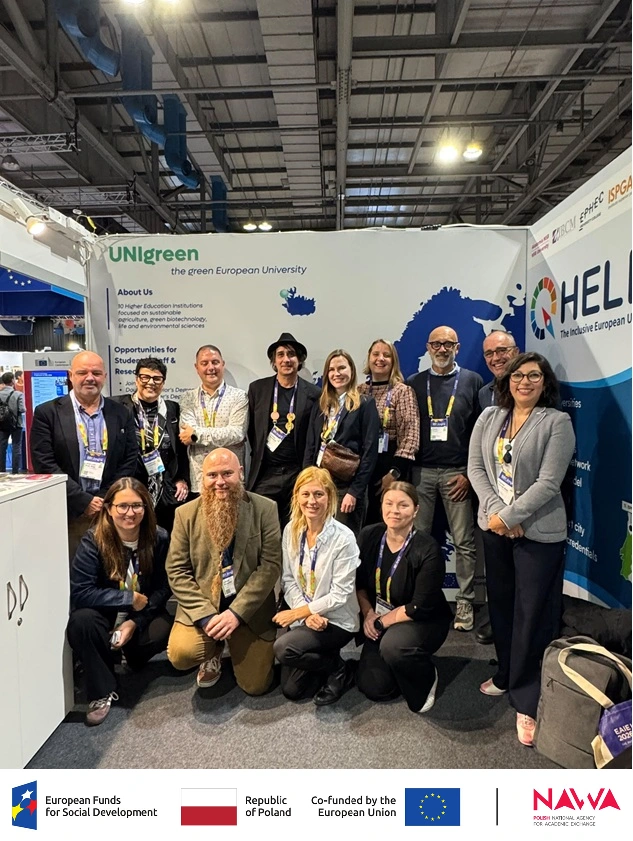
SGGW AT THE ANNUAL CONFERENCE OF THE EUROPEAN ASSOCIATION FOR INTERNATIONAL EDUCATION (EAIE)
How can we communicate effectively in teams composed of representatives of different generations? How can we better respond to the needs of students with diverse learning styles, expectations, and study approaches? These questions were at the heart of a training programme on intergenerational communication held at the Warsaw University of Life Sciences (SGGW).
Thanks to financial support from the Polish National Agency for Academic Exchange (NAWA), the SGGW International Relations Office organised a training course dedicated to communication in intergenerational teams. The event was primarily addressed to academic staff, for whom effective communication with representatives of different generations, including students with diverse needs, learning styles, and expectations, has become a key teaching competency in today’s higher education environment.
The training provided a valuable space to discuss the challenges of contemporary teaching and learning, exchange experiences, and jointly explore solutions that address the needs of a diverse academic community. Participants had the opportunity to reflect on the changing nature of the academic environment and the role that conscious, empathetic, and effective communication plays within it.
The programme covered both theoretical and practical aspects of understanding today’s students, who have grown up in a world shaped by digital technologies. Participants explored the characteristics of different generations, from Baby Boomers to Generation Alpha, and discussed the specific learning habits, motivations, fear of failure, and expectations for immediate feedback commonly associated with Generation Z. They also reflected on how Generation Alpha may transform higher education institutions in the coming years.
An important part of the training consisted of workshops and practical exercises. Participants created empathy maps for students from different European countries, analysed various forms of digital communication, from email to instant messaging, and developed strategies for responding to challenging situations, such as dealing with demanding students or supporting those who become withdrawn. The programme also included the project panel “UNIgreen Universities Future-Ready”, dedicated to developing a catalogue of best practices for universities in recruitment, teaching, and administration.
“Today’s universities need not only modern tools but also thoughtful and conscious communication that takes generational and cultural differences into account. This training provided an opportunity to develop competencies that are particularly important in an international academic environment, where the quality of relationships and communication has a direct impact on the quality of education and cooperation,” emphasised Katarzyna Specjalska, Head of the International Relations Office at SGGW.
The training was delivered in both Polish and English and formed part of a broader project supporting the professional development of university staff. The event demonstrated that intergenerational communication is becoming an increasingly important element in building a modern, inclusive, and effective academic environment.
Training dates: 14-15 April 2026.
15-19.06.2026
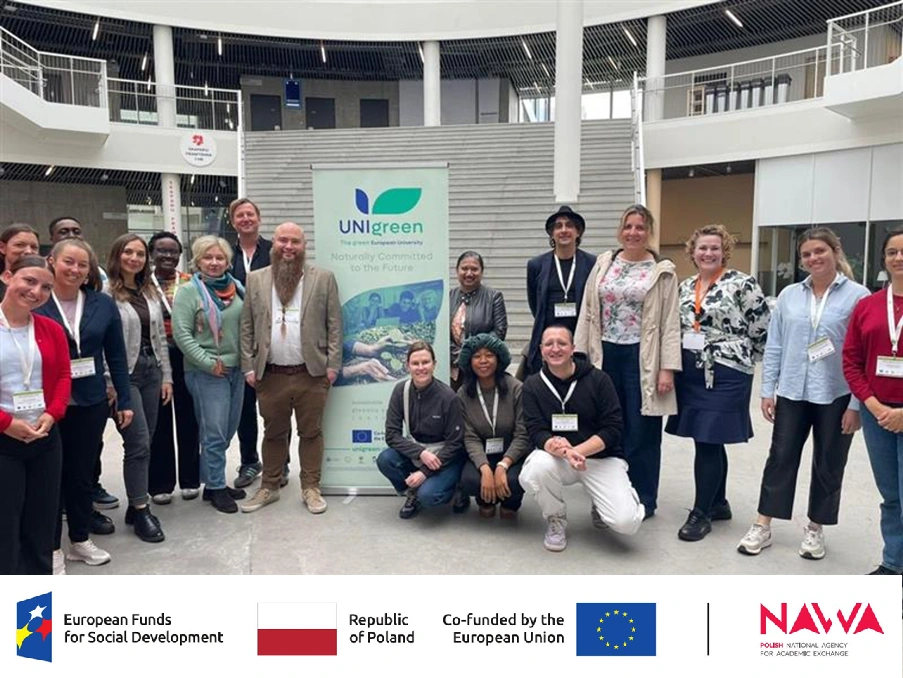
IROICA Staff Training
Representatives of Warsaw University of Life Sciences (SGGW) took part in the IROICA Staff Training 2026, an international professional development event bringing together international relations specialists from life sciences higher education institutions across Europe.
IROICA is a European network of international relations professionals from life sciences universities, providing a platform for exchanging experiences, discussing current challenges, and strengthening cooperation between institutions.
This year’s edition was organised under the theme:
“Are We Powerless? Internationalisation in a Fractured World”
The programme addressed the challenges facing higher education in an increasingly complex global environment and explored the role of internationalisation in fostering cooperation, resilience, and mutual understanding.
Participation in the training provided SGGW staff with an excellent opportunity to exchange best practices with colleagues from across Europe, discuss innovative approaches to international cooperation, and strengthen professional networks that support the university’s internationalisation efforts.
The participation of SGGW staff in the training was made possible by funding from the Polish National Agency for Academic Exchange (NAWA) under the “Support for European Universities” (Wsparcie Uniwersytetów Europejskich) project. This support enables SGGW employees to engage in international professional development activities, strengthen institutional cooperation, and contribute to the ongoing internationalisation of the university.
The knowledge and experience gained during the programme will support the further development of international activities at SGGW and help expand opportunities available to students, academic staff, and administrative employees through international partnerships and collaborative initiatives.
15-18.06.2026
23-26.06.2026
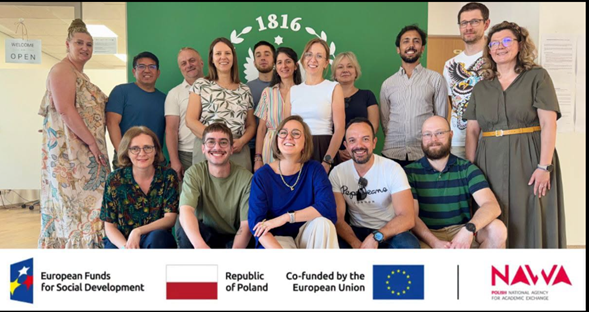
Szkolenie Train the Trainer
Internationalization and training skills
How can universities become more open to the world and better prepared for cross-border cooperation?
This question was at the heart of the international “Train the Trainer” programme hosted by the Warsaw University of Life Sciences (SGGW), which brought together representatives of the UNIgreen Alliance and SGGW staff.
Over four intensive days, participants explored key topics related to the internationalisation of higher education, the development of international academic networks, student and staff mobility, and effective management of projects carried out by multinational teams.
Particular attention was given to the development of global competences, intercultural communication, and strategies for combating stereotypes and discrimination. Participants emphasised that a truly international university is built not only through partnerships and collaborative projects, but also through openness to diversity, mutual respect, and the ability to work effectively in multicultural environments.
The training also provided an excellent opportunity to exchange experiences, share best practices, and develop new ideas for future initiatives within the UNIgreen Alliance.
The participation of SGGW staff in the training was made possible by funding from the Polish National Agency for Academic Exchange (NAWA) under the “Support for European Universities” (Wsparcie Uniwersytetów Europejskich) project. This support enables SGGW employees to engage in international professional development activities, strengthen institutional cooperation, and contribute to the ongoing internationalisation of the university.
We want to thank all participants for their active engagement, inspiring discussions, and valuable contributions. We hope that the knowledge gained and connections established during the training will lead to further collaborative initiatives that strengthen the international dimension of our universities.
14-15.04.2026
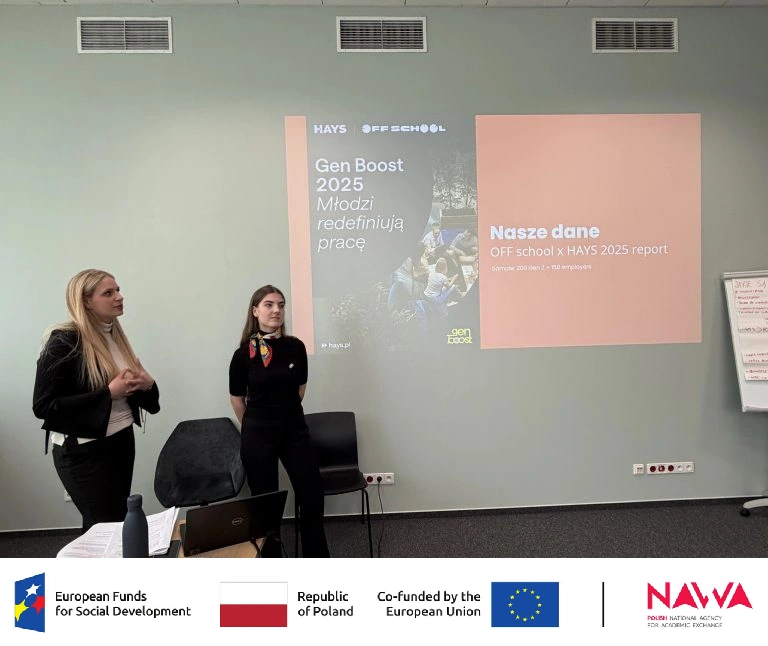
Szkolenie z komunikacji międzypokoleniowej
How can we communicate effectively in teams composed of representatives of different generations? How can we better respond to the needs of students with diverse learning styles, expectations, and study approaches? These questions were at the heart of a training programme on intergenerational communication held at the Warsaw University of Life Sciences (SGGW).
Thanks to financial support from the Polish National Agency for Academic Exchange (NAWA), the SGGW International Relations Office organised a training course dedicated to communication in intergenerational teams. The event was primarily addressed to academic staff, for whom effective communication with representatives of different generations, including students with diverse needs, learning styles, and expectations, has become a key teaching competency in today’s higher education environment.
The training provided a valuable space to discuss the challenges of contemporary teaching and learning, exchange experiences, and jointly explore solutions that address the needs of a diverse academic community. Participants had the opportunity to reflect on the changing nature of the academic environment and the role that conscious, empathetic, and effective communication plays within it.
The programme covered both theoretical and practical aspects of understanding today’s students, who have grown up in a world shaped by digital technologies. Participants explored the characteristics of different generations, from Baby Boomers to Generation Alpha, and discussed the specific learning habits, motivations, fear of failure, and expectations for immediate feedback commonly associated with Generation Z. They also reflected on how Generation Alpha may transform higher education institutions in the coming years.
An important part of the training consisted of workshops and practical exercises. Participants created empathy maps for students from different European countries, analysed various forms of digital communication, from email to instant messaging, and developed strategies for responding to challenging situations, such as dealing with demanding students or supporting those who become withdrawn. The programme also included the project panel “UNIgreen Universities Future-Ready”, dedicated to developing a catalogue of best practices for universities in recruitment, teaching, and administration.
“Today’s universities need not only modern tools but also thoughtful and conscious communication that takes generational and cultural differences into account. This training provided an opportunity to develop competencies that are particularly important in an international academic environment, where the quality of relationships and communication has a direct impact on the quality of education and cooperation,” emphasised Katarzyna Specjalska, Head of the International Relations Office at SGGW.
The training was delivered in both Polish and English and formed part of a broader project supporting the professional development of university staff. The event demonstrated that intergenerational communication is becoming an increasingly important element in building a modern, inclusive, and effective academic environment.
Training dates: 14-15 April 2026.
14-16.01.2026
Intercultural communication course
On 17–19 November 2025, an Intercultural Communication Training was held with the participation of staff from SGGW and representatives of UNIgreen partner universities from Iceland, Portugal and Bulgaria.
The aim of the training was to equip participants with the knowledge and practical skills necessary for effective intercultural communication, both in interactions with international students and in everyday cooperation among staff from the eight UNIgreen universities. The training programme was tailored based on an in-depth needs analysis, taking into consideration the cultural diversity of the alliance partners (Poland, France, Italy, Spain, Portugal, Bulgaria, Belgium, Iceland) as well as the international structure of student communities.
Through interactive, workshop-based activities, participants developed their ability to identify communication barriers, strengthen intercultural interaction skills, and enhance cooperation in an international academic environment. The competencies gained will contribute to improving the quality of support for international students, facilitating effective collaboration within the European Universities alliance, and strengthening the institutional capacity of the participating universities. Upon completion, participants verified their learning outcomes through a test and received certificates.
The training was funded under the UNIgreen Skills – Mobility Training Program, Agreement no. BPI/WUE/2024/1/00014/U/00001, implemented within the Support for European Universities Program of the Polish National Agency for Academic Exchange (NAWA). The Program is financed by the European Funds for Social Development 2021–2027, as part of the project Support for Alliances of European Universities no. FERS.01.05-IP.08-219/23.


17-19.11.2025
Intercultural communication course
The second edition of the “Intercultural Communication Course” (14–16 January 2026) concluded successfully and received very positive feedback from participants. The training brought together administrative and academic staff from UNIgreen partner universities: Warsaw University of Life Sciences (SGGW), the Agricultural University of Iceland, the Polytechnic University of Coimbra, and the University of Almería.
The workshops strengthened participants’ competences in intercultural communication and international cooperation, particularly in the context of jointly implemented projects.
An important aspect of the training was the application of theoretical concepts to the real challenges faced by UNIgreen international teams, including diversity management, conflict prevention, and effective collaboration in distributed teams. Working with practical examples and best-practice sessions enabled participants to see how theoretical knowledge can be translated into concrete actions.
As one participant noted:
“The most valuable aspect of this training was its practical and comprehensive approach to intercultural communication, firmly grounded in the realities of academic and project work, especially within the UNIgreen alliance.
A particular strength of the course was the opportunity to systematize concepts and cultural models and translate them into everyday professional practice. Understanding cultural dimensions and differences in values, norms, and communication styles made it easier to identify the sources of misunderstandings, which often arise not from ill intent but from differing cultural frameworks. Another highly important component of the training was developing awareness of one’s own stereotypes and biases, as well as fostering attitudes that support openness, equality, and inclusivity. The self-assessment of intercultural competences helped participants realistically evaluate their strengths and identify areas for further development.”
The training was funded under the UNIgreen Skills – Mobility Training Program project (Grant Agreement No. BPI/WUE/2024/1/00014/U/00001), implemented within the Support for European Universities programme administered by the Polish National Agency for Academic Exchange (NAWA). The programme is financed by the European Social Development Fund 2021–2027 under the project Support for Alliances of European Universities (Project No. FERS.01.05-IP.08-219/23).


12.10.2025
RUSZYŁA REKRUTACJA NA SZKOLENIA Z KOMUNIKACJI MIĘDZYKULTUROWEJ
Zgłoszenia można składać w terminie od 12 do 1 października 2025 r. na udział w szkoleniach z komunikacji międzykulturowej, które odbędą się w dwóch edycjach:
- Grupa I: 17–19 listopada 2025 r.
- Grupa II: 14–16 stycznia 2026 r.
System rekrutacyjny: https://rekrutacja.sggw.edu.pl/pl/offer/REK_PROJECTS/programme/NAWA_WUE_Intercultural_communication/
01.07.2025
Już we wrześniu rusza pierwsza Scientific Mission: „Ecosystem Services In Functional Connectivity”
w ramach projektu UNIgreen SkillS – Mobility Training, organizowana przez #JRC4!
To wyjątkowa okazja do zdobycia międzynarodowego doświadczenia
🔍 Chcesz wziąć udział? Sprawdź szczegóły i regulamin na stronie:
👉 https://unigreen.sggw.edu.pl/wydarzenia-projekty-satelitarne/projekt-unigreen-nawa/misje-naukowe/
Zapraszamy!
